Showing posts with label heaters. Show all posts

Thursday, May 20, 2021

When to update to new stuff?

Tech changes every day.  Our fast paced world is presenting us with new, and better, ways to accomplish most things on an hourly basis.  Some of this is very intriguing such as electric vehicles or 3D printers.  I do get annoyed, however, being told that I have peeled a carrot wrong my whole life and this new hack or tool will be the only answer.  And though I am sure that my carrot peeling skills are just fine, at what point does the machinery in my shop need to upgrade?  When is the new really better than the old?

What can the new tech do?

If the new gadget is cooler looking than the old one you might be inclined to switch.  Aesthetics in an automobile are important.  We all like new, shiny things.  However there are certain requirements that make a new device worth adding to a shop.

  • does it make a process faster?
  • does it reduce costs?
  • does it make a final product better?
  • does use less floor space for the same results?
  • does it require less power for the same production?
  • is it easier to use?
There could be more to the list, but the idea is that a new gadget needs to improve production either with cost or quality or time.  If it does not do any of these things, just wait.  Another version will.

What does the new tech NOT do?

Yes that is important.  If the new item does go faster or reduce costs but it makes an inferior product it is probably not worth the investment.  If it goes faster and makes a great product but the cost makes the RIO low, then it is not worth the financial outlay.  If it does not do all the steps in production that the current version can do, then this is not a gain.  New is not always better.

When should the old tech go, no matter what?

I say that with some wisdom.  As a manufacturing company who has produced machinery since 1979, we help people every day fix stuff.  We offer free phone service and with the use of digital photos, Zoom and FaceTime we are able to fix most old machines.  Many times that repair is priced quite reasonable and the customer keeps using a machine from the 80's.  

However, sometimes old is old.  Broken is broken.  And being thrifty (read cheap) does NOT help your bottom line.  Maybe you can get the parts for a 1984 machine.  However, how long were you down waiting for them?  How long did you have to search for a supplier for them?  Are they the direct replacement or did you have to modify the machine to make them work?  All of those items cost money.  Down time means late production.  Your search time means you did not spend time making sales or managing your production.  Modifications to old stuff takes both your time and down time and they are never quite what you needed.  Is that cost beneficial?

We do understand small business and the need to keep costs down.  We understand budgets.  We also know that if you have big equipment with big repair bills you have a hard time paying, then your really needed smaller equipment to suit your space and revenue.  Crunch those numbers sometime.  You might be surprised to find out that that big stuff you bought at a great price is costing you more than you make and newer smaller stuff would make you more profitable.  Hard to fathom sometimes but it is true.

How can we help you figure it out?

Most people do not like to discuss financial situations with sales people.  But the truth is, good sales people want to see their customers succeed and make money.  Think about your own style.  You want to have return business and you treat a customer with the goal of seeing them again.  Capital goods sales people are the same.  We would like you to buy well so you do well.  Then call us again for the next cool tech item that you are interested in.  So consider sales people as allies who gain when you gain.  Ask them if it is worth it to keep with what you have or go new.  Yes they will pitch new as hard as they can.  They have kids to feed, just like you.  But good ones will help crank the numbers to see if the justification is there for your shop.

You might be surprised by what you learn.

Wednesday, March 17, 2021

Start your engines. The season is about to begin.

 Are you ready?

The season is about to begin.  It has been a long time coming but it is finally here.  Are you ready?

What exactly does that mean?  Are your machines ready for all the action about to happen?  Let's go over what you should be doing now so you are ready for all the orders that are coming your way.

Check under the hood.

Conveyor ovens

Your curing system is the most important machine in the building.  You can print in any number of ways.  But getting a shirt cured has limited resources.  So keep your conveyor ovens at optimal performance levels.  How do you do that?
  • Clean it.  Yes, it is the most important thing.  Get all the fuzz off of it and out of the control panel and fan systems.  The biggest reason for oven failure is overheating due to lint build up and fan functionality.  So get out the shop vac, open the control panel and clean it out.
  • Replace stuff.  We understand that in low times, the cost of replacement parts can seem prohibitive. However, if you are down during the busy times due to lack of maintenance, the cost to the business is higher.  Cooling fans, old drive motors and dirty or torn conveyor belts are quick to change and will reduce down time during high volume months.
  • Have commons part parts on hand.  Some items are low cost and quick change.  Having these items on hand will lower any downtime. Relays, heater connectors, fans and fuses are small and inexpensive.  These are highly recommended to stock on your shelf.
  • Check out the drive system.  Worn sprockets and chains will cause power spikes that will damage a motor control.  This will double your replacement cost.

Automatic printer

Unless you want to manually pull a squeegee on the long run you have, you should spend a little time making sure that your Electraprint is running well.  There is a reason that it asks every time it turns on, "Have your greased me today".  It is important that all the moving parts on the machine have lithium grease applied and lint removed.  This includes squeegee carriages, head side rails, cheese wheels and lift mechanisms.  There are a few other items on the press to check.
  • Squeegees and floodbars need to be sharp and smooth.  No nicks or dull edges.  
  • Have some extra squeegees because color changes just slow you down.  A squeegee for each color group is a great investment.
  • Platens are clean and the rubber coating doesn't have bubbles or tears.  A great print happens on a flat, smooth surface.  Don't skip on the basics.
  • Chains and motors and sprockets do wear.  These are what drive the print heads.  Check now while you have time for a sprocket change.
  • Clean it up.  Seriously, clean shirts come off clean printers.  And it is the cheapest way to keep a press run smoothly.

What should be in on your parts shelf in case of a pit stop?

Each machine has some essential items that cannot be bypassed.  And many of these are inexpensive so having them immediately available is like having a spare set of tires ready when the car rolls into the pit.

Dryers

This is all about moving electricity.  Simple parts will keep an oven rolling until bigger items can arrive.  
  • Fuses or panel breakers
  • Power breakers
  • Relays
  • Terminal blocks for older heat chambers

ElectraPrint Automatics

  • Photo eyes -- there are a couple of types, so have one of each
  • Safety switches
  • Flash controls
  • Head cable set

What tools are needed for the pit stops.

It surprises us often that many of our customers own industrial equipment but do not think to have a basic tool box anywhere in their shop.  This does not need to be an extensive set of tools, but some basics are needed to keep a shop rolling through a pit stop.
  • Open end wrench set
  • Socket set 
  • Screwdriver set
  • Nut driver with 1/4" socket
  • Basic multi meter.  Our phone techs can teach you to use one, but they are really handy when working on anything electrical.

So get ready to race.

Order some inks, get your screens stripped and coated and set out your print stations.  There is business in the air and the race to the finish will be a wild one.  Let's not have any crashes into the wall.  We will all get to the finish line.  


Monday, March 11, 2019

Being prepared is a profitable idea

Dreaded downtime

Downtime due to machinery break down is a killer for the bottom line.  Not only do products not ship, employees are not productive.  This translates into an increased cost of goods and a decrease in revenue.  This is a big problem for both large and small producers.  Small producers, even if they are paying themselves and do not track labor costs have a decrease in revenue and a potential loss of a customer.  Larger companies track worker productivity as it relates to job costs and overhead.  As the ratio changes due to machinery downtime, profits suffer.

The solution for much of this is simple.  First, all production facilities need someone that has an understanding of the maintenance required for all of the machinery on the production floor.  This includes the simple items such as cleaning, lubrication and calibration.  Additionally this person should be handy with tools.  In most cases, these are difficult tools.  Simple wrenches, screwdrivers, wire cutters and a crimping tool, and possibly a multi-meter will do the trick.  

 Additionally, there are always a few items on all machinery that are essential for them to operate and cannot be bypassed.  If your production is reliant on any machine, then having these items in stock is a wise investment.  How much does this cost?  You would be surprised at how little, especially compared to the cost of downtime.

Midline Printer

LED Exposure System
As a suggestion, a manual printer will operate without any inventory readily available.  If they use a gas strut to support a print head, keep in mind that these have a limited life and having them available after about 2 years is a good idea.  These items are about $50 so this is minor.  An exposure unit will need a bulb at the 2 year mark.  So be prepared.  This can cost between $70 and $300 depending on the bulb.  New LED style units will not have this issue.  But a vacuum motor and timer are another part of that unit is essential.  If your exposure unit goes down, are you prepared to not process screens for 3 days?  The entire package of parts should cost less than $350.  

AirPony Dryer
Conveyor ovens are another issue.  If your shop only has one oven, your production hinges on the function of this machine.  Most systems in a conveyor oven can be bypassed to get a production floor moving.  However, the drive system cannot.  So, a drive motor and a motor control would be excellent items to have on hand for any over over 2 years old.  Again, the cost is minimal compared to the impact of zero production.  If you print garments that have a rigid temperature requirement, then stocking temperature controls is also a wise investment.
As for automatic printers, this is all dependent upon which type you are running.  For the ElectraPrint, we recommend a few minor items.  Photo eyes are handy, but typically the press can run with exchanging parts between heads.  With air machines, extra air cylinders are a wise choice.  Though, again, you can borrow from one head to another, having a set of cylinders is smart decision.

All machinery will have wear parts.  Just like a car, oil changes will keep a car going for many miles, but at some point, things need replacing.  Plan ahead, stock a few things and be prepared.

Friday, August 11, 2017

Green technologies inspire new solutions

Visit Brown in booth #3301 and #1845
The upcoming SGIA show offers opportunities for any decorator to see amazing advancements in technology and innovative solutions for existing production issues.  The world of digital printing on garments was presented over a decade ago at SGIA.  Now the industry is moving into creative garments that have tech and communications woven into the fabrics.  Products that are better uses of resources, both environmental and economic.  Products that are immediate, offer rapid change and can be efficiently produced.  These new challenges have driven BrownDigital to create new lines of products that give flexibility to production, for both function and application.

FY-2x27-45 extended
The FireFly™ curing system was originally developed to address the direct to garment printing industry.  It was designed to speed up curing of digital inks and pretreat.  This technology has also been applied to similar printing inks such as discharge and water base ink lines.  The FireFly has proven that it can cure these ink lines in smaller space with equal results compared to traditional curing units.

Knowledge of what the FireFly can do has led BrownDigital into other, newer printing production arenas.  Water based ink transfers and silicone ink transfers have rapidly become high volume contenders in garment decorating.  Water based ink lines offer an environmentally cleaner alternative decorating option and silicone inks solve problems with durability and color bleed.  The FireFly can cure these transfers in 18 seconds as opposed the the traditional cure time of 42 seconds.  This time reductions increases the capacity of an auto feed sheet line by nearly 80%.  This means more production in less space and reduced power consumption.  Production line size reduction of 50% and a total energy reduction of 80%.  Greener tech for greener products.

Additional information on the SGIAExpo and the BrownDigital FireFly can be found online or contact the Brown Manufacturing sales and technical staff.  Visit our booths #3301 and #1845 at SGIAExpo for a full demonstration of all of the FireFly benefits.

Thursday, March 30, 2017

Anaconda flash cure features


The Anaconda is the latest option for the ElectraPrint automatic t-shirt printer.  This system uses heat and a roller to flatten the fibers of a garment into the base ink layer.  The effect is sharper prints that pop off a shirt and feel softer and smoother.


Simple in design.

Using the structure of a Stretch Devices M3 roller frame, the Anaconda utilizes teflon sheeting as the base support that is in contact with the garment.  A flat, flexible heater is placed in the squeegee side of the teflon.  A digit temperature control with a thermocouple will keep the heater within 7° of the set temperature.  A silicone pad is placed on top of the heater for friction protection.  A roller is used in the squeegee system to press the heat onto the shirt.  Typically used in conjunction with a standard QuartzAir flash, this process offers startling results with quick speed.

Not just for Brown presses.

Because the frame structure is a standard 23" x 31" M3 roller frame, the Anaconda can be used with any automatic press.  Roller systems are available for all press types.  

Reasonable cost and simple install.

The Anaconda is no more expensive than our QuartzAir flash systems and they require only 120V, 17A of power, installation is quick and simple.  These are a great addition to any shop.  

For additional information call us today.  616-249-0200


Friday, December 2, 2016

Flash cure cost savings

FastFlash

We offer different styles of flash cure units for manual printing and athletic number printing.  FastFlash™ and SplitFlash™ are historically reliable and effective at their function.  The QuartzAir™ flashes for both manual presses and QuartzAir SplitFlash for athletic numbering systems have a higher initial investment, function just as well but offer long term cost savings that are often overlooked.

The less expensive version is designed with calrod™ style heaters.  The

The cost savings on a quartz style flash system comes in the cycle count and speed.  Due to the ability to reduce the heat between print cycles, the power consumption reduces and so do power costs.  One of the major benefits of printing with a quartz flash is that the flash cure time for each garment it a constant.  The flash cycles on when a garment activates a sensor and the the flash cycles to a lower temperature after a preset amount of time.  When the flash is at a lower temperature, its pose consumption is at a fraction of full.

This power consumption cycle differs from the FastFlash style because calrod heaters stay on at full capacity for the entire shift without any reduction for down time.  This is a 100% full current load for 8 hours.

So enough of the tech talk.  What does this mean for the monthly bill?

A customer recently sent us an email about their experience.

"So I have had the Quartz Air flash for about 5 months now and I wanted to give you some more info you could share down the road... 
I moved over from the FF2020 and it might just be due to the way that I approach printing - but when I am comparing print days BEFORE the Quartz Air and now - the savings is pretty substantial, or a lot more than I had thought. 
On an average print day I am using about $5 less electricity. 
Doesn't sound like a ton, but $5 for a 5 day work week is $1,300 a year. That's pretty substantial if you ask me. Not to mention the shop being much cooler and not having to wait for the flash to heat up etc. 
Now I know everyone's experience may vary but even just saving $500 per year would more than pay for the unit against a traditional IR panel flash over 5 years. 
I love this thing. Thanks for making it!"

 As for the Numberprinter QuartzAir SplitFlash we have more definite cost analysis.

Quartz Flash High Power
9600
watts
Quartz Flash Idle Power (50%)
6400
watts

Time at idle power (per minute):
50
seconds
Time at full power (per minute):
10
seconds

Average Quartz Flash Power
6933.33
watts


Average Conventional Split Flash Power:
13200
watts
Average Power Savings of Quartz Flash Over Conventional Flash:
6266.67
watts


Power usage per 9-hour day:
56.40
KWh
Electricity cost per KWh:
0.10
$/KWh
Cost Savings per 9-hour day:
$5.71
/day
Cost of purchasing Quartz Flash:
$3,000.00
 unit
Number of days to recoup purchase price:
525.01
days
Number of 365-day years to recoup purchase price:
1.44
years

Everyone has a budget to purchase equipment. 

The choice of conventional flash curing equipment is a good one.  The final product produced will be high quality and the cost of running the equipment is well within a monthly cost structure.  However, when looking long term, consider quartz flashes for both the timer function on the heat and for the lower energy consumption.  A higher quality garment with a lower power bill.  Who wouldn't want that?

Thursday, September 22, 2016

Flash cure options. Which is right for your production?

A must-have

One essential machine for any textile printing production line is a flash or spot cure unit.  These machines are essentially heaters on a stand that gel under layers of ink so that additional layers can be printed on top.  This process is necessary for white inks to pop and specialty inks to shine.  However, the technology, sizing, features and price tag can vary from unit to unit.  So which one is best for your production?

Cal-rod or Firebrick style

These are the type of unit that the majority of print shops own and use every day.  They have a stable heat source that stays hot continually and is durable and reliable.  The temperature is typically controlled by adjusting the distance from the garment and the length of time heat is applied to the print.  

One factor in the intensity of the heat is the size of the heat area in relation to the power supplied.  Many community print shops like machines that only require 120V power.  So, to provide the best unit at that power level we designed the FF-1616.  This unit has a heating area of 16" x 16".  Some of our competitors offer a similar unit with a heat area of 18" x 18".  The 120V power distribution through a larger space can cause a cooler overall surface area.  

For 208V-240V power supply, the heating area can get larger.  The Brown FF-2020 is a 20" x 20" heating area.  Again, there are some that are 24" x 24" but the heat intensity may reduce with that large of a surface area.

This style flash units often have limited controls and features.  Since these heaters are not quick to respond but hold heat well, simple temperature controls are best suited.  The Brown FastFlash comes equipped with rheostat style controls and also wheels for easy relocation on the production floor.

There are some units are available with motorized heads that will rotate the heater on and off the platen for a set amount of time.  This reduces the possibility of garment or platen scorch and offers a more consistent gel of ink.

The biggest feature of this style flash unit is the price.  Because of the heater style and limited controls, these units are the most inexpensive type.  They ship UPS or FedX because they are light weight and they last for years.  

Quartz style flash units

Originally designed to mount on automatic t-shirt printers, these are rapidly becoming the standard for both manual and automatic production lines.  They are instant on/off and are quickly react for temperature adjustment.  They are very hot but, since they are quartz bulbs, they are not as reliable as the cal-rod style.  

These type units will typically come with temperature controls.  The type of controls affects the final cost of the unit.  They also will vary with the number of bulbs and how tightly they are mounted.  The more bulbs in a smaller space the hotter the unit.  But also, the more bulbs, the higher the power requirements.

Distance from the garment is still a factor.  The heaters are very intense and the heat distribution uses reflectors and the distance to the garment will balance the intensity.

The QuartzAir Flash from Brown balances the heat requirements with reasonable power supply needs.  They can be connected with an ElectraPrint machine or as a stand alone unit for any manual printer.  The units equipped to print on manual machines come with a timer that is activated by a foot switch or a laser sensor.  

The price tag is the final issue.  These units start 3x than the price of a cal-rod style.  However, they are hotter, faster and give a more reliable result.  This is a worthwhile investment when printing higher volume or temperature sensitive garments.  

Anaconda™.  Wait!  What's that?

With the advent of direct to garment printing, the look of the finished garment has changed.  Also, digital print heads are now incorporated into automatic textile screen printers.  This has changed the base requirements for a flash unit.  

The Anaconda is a flat heater encased in teflon that a roller presses onto a print.  The goal is to fold the fibers into the base coat and gel the ink.  This process is done manually on DTG machines and it creates a cleaner finished print.  Now that look and process is demanded on automatic presses.  The Anaconda will mount onto any manufacturer's press and a roller is substituted for the squeegee.  The shirt is flashed and pressed for the next layer of ink.
These units are highly controlled, offer quick reaction to temperature regulation and give the crisp print desired in the latest fashion market.  What is amazing is the price.  These units are similarly prices as the QuartzAir units.  

So what is right for your shop?

That is the real question.  The factors of production speed needs, power availability, finished look requirements and bottom line budget are what drives this decision.  For today, we still see most community printers with cal-rod flashes being the mainstay of the production floor.  The quartz style rule the automatics today and are edging in on the manuals but the Anaconda flash has an interesting future.

If you are not sure and want a bit of personal guidance, give us a call.  616-249-0200


Wednesday, June 8, 2016

Spring cleaning is a good use of downtime

It is that time again.  Time to clean house.

We are talking about machine maintenance.  Not cleaning out the break room fridge or laying off employees.  Though, those might need to happen as well.  That is up to you.

Every spring, as the weather heats up, our service calls increase.  This increase can usually be linked to maintenance being postponed or operators making adjustments.  So, when you have a slow time there needs to be a to-do list that will keep your machinery in proper working order.

What should be on this list?

Every machine on your production floor has items that regularly need cleaning, changing or adjusting.  These items should be listed and this list should be kept for reference.  A log of when the maintenance was performed is a great idea.  This is a sample maintenance log for a vehicle but the idea is the same as printing equipment.  A list of required items is on one side with the dates of completion.  A list of unscheduled repairs in on the other.  

Each machine would have a different list and all of these logs should be kept together.

Conveyor ovens
TRX Conveyor Oven

  • Clean all fan filters
  • Clean and check all fan blades
  • Clean lint from all surfaces
  • Clean lint from inside the control panel
  • Clean and oil the drive system.  Adjust the chain tension if necessary
  • If the oven uses quartz heaters, check with the manufacturer for cleaning instructions and schedule 
  • Test all the cal-rod heaters
  • Clean the conveyor belt

Automatic printers
ElectraPrint

  • Clean all surfaces
  • Clean all platens
  • Check platen rubber for wear.  Replace rubber if necessary
  • Grease all moving parts
  • If this is an air machine, clean the lines and confirm the air connections
  • If this is an air machine, maintain the compressor
  • Clean all fan filters
  • Clean all fan blades
  • Clean lint from the control panel
  • Clean lasers 
  • Clean skippy sensors
  • Check the chain tension on each print head
  • Check carriage stiffness for each print head
  • Grease all knobs and replace any that are stripped
  • Lubricate the registration gates

Manual printers
MasterPrinter

  • Clean all surfaces
  • Grease all knob threads
  • Replace any broken or stripped knobs
  • Grease any open bearings
  • Lubricate registration gates
  • Check springs for wear and replace suspect springs
  • Check gas lifters for leaks.  Replace any leaking lifters
  • Confirm platen leveling to the print head.  Check with the press manufacturer for guidelines on this procedure

Screen room
LED Exposure System

  • Clean all glass with glass cleaner
  • Clean all surfaces
  • Clean all fan filters
  • Clean all fan blades
  • Replace any non-functioning fans
  • Replace any non-LED bulbs that are more than 2 years old
  • Clean vacuum rubber and replace if torn or worn
  • Clean washout sink.  Remove any built up emulsion

Notice a trend?

Yes, CLEAN is the main word here.  Most textile printing machinery will last for years with simple cleaning and maintenance.  We find that lint build up on fans and filters will cause early failure of electronic parts.  Also, unclean registration gates and pivot points will affect the registration of a press.  

While we appreciate all of the parts orders that we receive.  We know that your costs of downtime and spare parts are higher than your cost of preventative maintenance.  Every manufacturer will have a maintenance suggestion for their machinery.  If this schedule is followed in your facility, then the life span of your investment will be extended.


Monday, May 2, 2016

FireFly is production proven


So the FireFly™ is amazing new tech, but can it really keep up?

The FireFly continues to turn heads and raise eyebrows at shows and on forums.  Potential customers and industry pundits are amazed and skeptical at our claims of what this machine does and how little space it requires.  

For those new to the details of the FireFly, this machine has some features that are not available on any other curing system.
  • temperature monitoring of each individual garment
  • temperature control of each individual garment
  • independent curing parameters for each individual garment
  • thermal imaging camera system with flat screen temperature monitors
  • Linx Integration System for bar code item control
This is really cool tech.  However, the specs that cause skepticism is the minimal space required to achieve cure and, hence, high volume production.   The engineering design is all about heat control.  In a gas oven, there is substantial time needed to raise the temperature of a garment to a level to allow the ink to cure.  This is why many gas ovens include an IR bump.  However, in the FireFly, the heat energy applied to the garment is higher and more direct so the cure of the ink can happen sooner.  And, because of the imaging technology, the FireFly can control the garment temperature so that it does not exceed manufacturer's parameters.

So what does all this mean?  It means volume production in a small space.  

Typically, high volume shops run gas ovens that are 20' or longer in length.  They will often run 2 or more of these and each one is set to cure one particular type of garment.  Most of these ovens are 48" to 60" wide.  They usually have an IR bump that requires 3Ø power in addition to the gas feed.

The FireFly, in comparison, requires a much shorter cure chamber.  The curing system in the video above has 2 belts that are 36" wide and 90" of heat.  The total length on the system is 15 feet.  The cure rates show in the video happen all day long.  This was typical production in the facility.  

Also, if needed, the FireFly can change parameters for each garment run on the same belt.  It alters heat energy applied to the garment to match the specifications programmed.  This feature allows a shop to use a FireFly for multiple job runs simultaneously.  

So, to answer all the skeptics, yes it is cool tech.  And yes, the FireFly will produce high volumes of individually cured garments in a smaller space.  

Contact us for additional information on how this system can fit into your production system.


Wednesday, May 14, 2014

Our machinery and our warranty are long term.

After seeing the number of vintage Harco and Brown machines that are still in production we thought we would review our warranty statement.  We are most concerned with customer satisfaction, long term customer relations and helping our customers grow their businesses.

With machines from the 1980's still producing goods we are confident in our long term solutions.


But, for those who would like to know, our warranty is this for the original owners of Brown machinery:

  • 1 year full warranty
  • 3 year warranty on all cal-rod style heaters
  • 15 year warranty on all product chassis
  • 7 year warranty on printer registration gate systems
  • 2 year software upgrades
It is our belief that customers expect a solid investment in Brown products and we agree that machinery should be designed to provide consistent, maintainable production for many years.  
This is why our warranty is written with long term goals.

Brown has been a part of the screen print machine manufacturing world since 1979.  We choose design features that are durable and reliable.  As examples, the registration gate systems in our presses are hardened steel.  These are integral parts of the long term performance of the press.  These are not wear parts that re changed or adjusted.  It is thinking like this that has driven our design for over 30 years.

When considering expanding your business with new screen printing equipment, plan on your future.  Plan on printing on your machinery, not spending days repairing it.  Plan on Brown to help build your business future.

Friday, December 6, 2013

2013 Year in Review


The year in review.  It is all about product innovation.

For those of you who know us well, you understand that we are always about new ideas and innovations.  It is what excites our staff and increases our sales.  When our customers present new production issues or new opportunities become available, our creativity is sparked and the whole company starts looking for solutions and ideas.  2013 offered an array of production situations that have spurred the development of new products and enhancements to existing products.  

Take a look at the entry into a new market.

Not only did we create new products, we created a new division.  BrownDigital directs its efforts toward digitally printed garments.  Not the digital printers, but solving the production problems that have arisen from that new technology.  The idea of digitally printed shirts is growing but making them faster and in less of a hobbyist style is what BrownDigital is all about.

The first product line created in the new division is the DragonAir line of curing systems.  These units use DragonAir Core Technology to created a heated chamber to cure the pre-treat and the ink from digitally printed garments.  These units are also proven to cure conventional inks, water based inks and discharge inks.  

Here is a look at product innovation.

The excitement of the year started with the TRX software development that drove the DragonAir line.  This touch screen curing system control software offers amazing features and benefits not found on any other system.  TRX and TRXi units allow repeatable production environments, analytics on that production and access to control from remote locations.  This software was merged with the production proven UltraSierra X-Series line of conveyor ovens to create a new line of curing systems.

The next product that our engineers tackled was adding Sniper LazerLoad to the ever-popular NumberPrinter.  This enhancement is for simplifying the shirt load process.  Double digit numbers that include a "1" and single digit prints have always been a challenge for shirt-loading in high volume shops.  This new features gives line up guidelines to make the printing easier and faster.


The final enhancement that our engineers have worked on is the new wrench-less, quick-release squeegee and floodbar system for the ElectraPrint automatic textile printers.  This feature makes screen changes faster, squeegee load faster and pressure adjustments unnecessary.

Thankful as ever.

We are forever thankful for our loyal customers, our new customers and our awesome staff.  With new questions from our customers, our engineers get to design new stuff, our plant staff gets to build new things and our sales people can talk about new solutions.  It is a great circle and we look forward to what 2014 will give us the opportunity to create.  Keep asking and watching and you will see some cool stuff.


Wednesday, October 16, 2013

Is your dryer showing signs that it is time to upgrade?


CD-2411 Circa 1985

I walked through our south warehouse last week and noticed some screen printing dryers that appear to be a little older.  After checking a few serial tags I quickly realized the dryers are older than I am.  Many of these dryers still work and cure shirts as efficiently as they did in their prime, however, like hammer pants, that still function like they did in the 80’s.  It might be time to change your style. 

Disclaimer****If you are still wearing Hammer pants, using a pager, or believe the Internet will not catch on, please disregard the rest of this blog.


Curing technology and dryer efficiency has not changed much since the 80’s, and dryers are not featured on What Not Wear so how do we know if it is time to repair or replace our current curing system.

The following is a couple of questions you can ask yourself about your dryer and I will let you determine the results. 

Determine the Type

 Is your dryer gas or electric?
a.     If Electric continue
b.     If Gas we will tackle that in a later blog post

Size does matter

 Does your current dryer slow down production.
Simply put, drying technology is the same today as it was 25 years ago.  There are only two variables in the curing equation, Heat and Time. The higher you run the temperature, the faster you can run the belt. However this is a thin line, if you only cure the outside of the ink and not all the way through, the ink will fall off, or the shirt gets to hot and combusts.  In a perfect world we would like less heat and more time. If you cannot achieve a good cure at a slower speed it is possible you need a larger dryer. 

Driving a Fiero is not a good idea either

Do you constantly work of your dryer?

The cliché that time is money comes into play here.  If you dryer is not reliable or you constantly stop production to work it, you might want to look at a trade in. Or if jobs get returned due to curing issues this can easily damage your reputation as a company.  I could have kept the a Fiero running and saved a little money upfront but the continued repair and time lost was not worth it. As always in the end keeping the old running is more expensive than starting over again.

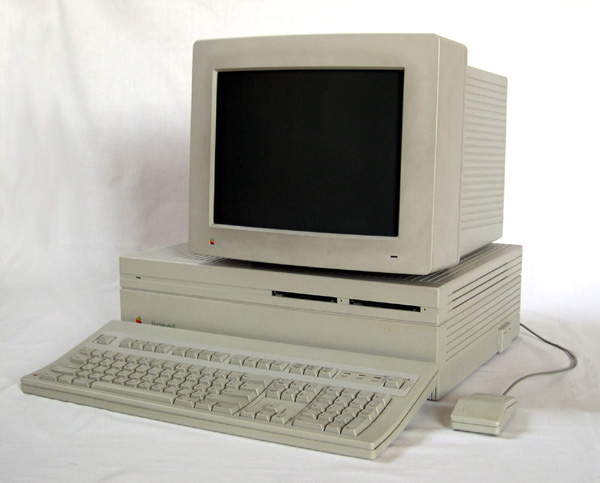
If you are reading this, chances are, you aren’t using a MACII

Will the electronic upgrade impact your business?

 If your dryer does not have a digital thermostat you have very little control.  It would be like turning the heat on in your house and never adjusting the temperature, simply opening doors and windows to achieve a comfort level.  The new digital style controls are not just flashy lights, they have function to:


a. Control the heat by turning on and off panels (More efficient)
b. Warn the user if a heater goes out or another part is not functioning correctly.
c. Allow for precise belt times in the oven
d. React to outside elements, by adding intensity or removing intensity from the dryer.

e. High End Dryers

TRX-3611

  1. Remember and store programs
  2. Graph shirt profiles
  3. Run an analysis on every job
  4. Accesses for account and maintenance from off-site 
  5. and loads more stuff.


Even Madonna understands the importance of new fabric

How many new fabrics are you encountering?
1980's
As the consumer markets push polyester, wicking and many other fabric styles, your dryer has to keep up. 

  1. Belt Speed --  Items require very distinct belt speeds, is your dryer capable of 30 seconds and 5 minutes?
  2. Do you have adequate forced air?  
    1. New inks and fabrics require air movement to achieve a proper cure without burning the substrate. 
    2. It is equivalent to convection air in a oven. 
    3. A substrate can stay in dryer longer with air movement and not such direct Infrared Hear.


The above is only intended as quick thought, as complicated as curing technology sounds it is very simple.  I am not going to argue with anyone that a Fiero will not get you from point A to point B.  Just about any commercial grade dryer with function and properly cure shirts, however, sometimes limping along with the old one costs you more time, reputation and headaches than biting the bullet and replacing it with a new one.

I just finished lacing up my roller blades, strapped on my Walkman and am hoping that dancing on the hood of Billy Idol's car won't scratch the killer Firebird paint job.