Showing posts with label sports numbers. Show all posts

Friday, March 27, 2026

Athletic numbering in the digital age

 Today's athletic number solution

DTF has taken over athletic printing.  This is the easiest way to customize a team, sponsor, name and number onto any jersey.  Just load, scan and press GO.  The Yet-Tee does it all.


The early years.

Brown Manufacturing is known for leading the athletic numbering machinery world for decades.  We developed patented technology for high volume direct print numbers with the NumberPrinter.  

We created simple machines for community printers who decorated leagues for only a few months in the year.  The Slider and the ShortStop were compact and simple to use.  

We offered a wide array of number fonts that were available for both the NumberPrinter and the Slider.  

However, while all this is still available, it has been replaced with the advancement of digital printing technology.  

There are many digital options.  The world of sublimation has taken over many sports.  Lacrosse and basketball are large consumers of sublimated uniforms.  DTG has also been effective for many teams.  That technology prints well on non-polyester items and allows for individualization.  And while heat transfer numbers have been available for decades, no athlete liked to wear them.

That is until the development of DTF.  The ink and application advancements within the last 5 years have changed the feel and weight of the final image on the garment.  The diversity of fabric adhesion gives a wide array of application possibilities.  And with the development of DTF digital printers, personalization is simple.  However, until now it has had a high labor and COGS element.

Printing, cutting and sorting of films and garments involves a lot of labor time.  And, as all community printers are aware, leagues do not offer great margins in what they can be charged.  Controlling costs time and materials is essential. 

Today's tech

Brown Manufacturing's  Stomper Yet-Tee automated DTF system requires only that the operator load the garment and scan a bar code.  The finished jersey with an individualized number, name and logo is returned to that same operator complete and ready to ship.

The Yet-Tee T-Line and L-Line systems include a DTF printer, power shaker, cure unit, Flipper placer and heat press.  Larger units feature multiple heat presses and a peel unit.  Art for each garment is specified within the barcode that the operator scans and that art is printed and placed into position onto the jersey.  The jersey is pressed and peeled and post-pressed and returned to the load zone.  Full customization in minimal time.  As an added bonus, the feel of the jersey is similar to the feel of screen print.

Why would an athletic printer still offer anything else?


Monday, February 11, 2019

Firefly curing systems for screen printing


Though the FireFly is often paired with our Synergy for DTG production, the system was originally designed for screen print applications.  At the time the product was developed, the athletic printing world was challenged with an influx of polyester garments that had a high level of bleed issues using standard curing technology.  Additionally, water base and discharge printing was on the rise and typical electric ovens did not offer enough air flow to cure these inks effectively.  The FireFly offers unheard of solutions to both of these issues.

Ink manufacturers have developed dyno-gray inks to block dye migration in the polyester garments.  These are pricey and add one more color to many designs.  We have seen one job that appeared to be 2 colors actually be 3, but needed to be printed on an 18 head press to get the best results.  The Firefly allowed for the removal of the dyno-gray because the system is in full control and is responsive of garment temperature throughout the curing chamber.

How does the FireFly do this?  Thermal imaging cameras monitor the temperature of the ink and the garment with constant feedback to the software.  This feedback directs the controls of the quartz heaters to constantly modify their heat to keep the shirt within required parameters.  This control keeps the shirt below the dye migration temperature.

Also, the water based inks and discharge inks require large amounts of air for each garment as well as the solid control of garment temperature.  Air flow within the chamber is specified to each garment and is separate from the heat directed on the garment.  This allows for rapid evacuation of water vapor as well a quick cure of the ink.

Brown is thrilled with the connection of the FireFly in the DTG world.  But we are equally pleased with the long term reliability and curing diversity that the unit has provided our screen print customers.  Multi-variate printing is the mainstay of this system.  And that is the screen print world.


Friday, December 2, 2016

Flash cure cost savings

FastFlash

We offer different styles of flash cure units for manual printing and athletic number printing.  FastFlash™ and SplitFlash™ are historically reliable and effective at their function.  The QuartzAir™ flashes for both manual presses and QuartzAir SplitFlash for athletic numbering systems have a higher initial investment, function just as well but offer long term cost savings that are often overlooked.

The less expensive version is designed with calrod™ style heaters.  The

The cost savings on a quartz style flash system comes in the cycle count and speed.  Due to the ability to reduce the heat between print cycles, the power consumption reduces and so do power costs.  One of the major benefits of printing with a quartz flash is that the flash cure time for each garment it a constant.  The flash cycles on when a garment activates a sensor and the the flash cycles to a lower temperature after a preset amount of time.  When the flash is at a lower temperature, its pose consumption is at a fraction of full.

This power consumption cycle differs from the FastFlash style because calrod heaters stay on at full capacity for the entire shift without any reduction for down time.  This is a 100% full current load for 8 hours.

So enough of the tech talk.  What does this mean for the monthly bill?

A customer recently sent us an email about their experience.

"So I have had the Quartz Air flash for about 5 months now and I wanted to give you some more info you could share down the road... 
I moved over from the FF2020 and it might just be due to the way that I approach printing - but when I am comparing print days BEFORE the Quartz Air and now - the savings is pretty substantial, or a lot more than I had thought. 
On an average print day I am using about $5 less electricity. 
Doesn't sound like a ton, but $5 for a 5 day work week is $1,300 a year. That's pretty substantial if you ask me. Not to mention the shop being much cooler and not having to wait for the flash to heat up etc. 
Now I know everyone's experience may vary but even just saving $500 per year would more than pay for the unit against a traditional IR panel flash over 5 years. 
I love this thing. Thanks for making it!"

 As for the Numberprinter QuartzAir SplitFlash we have more definite cost analysis.

Quartz Flash High Power
9600
watts
Quartz Flash Idle Power (50%)
6400
watts

Time at idle power (per minute):
50
seconds
Time at full power (per minute):
10
seconds

Average Quartz Flash Power
6933.33
watts


Average Conventional Split Flash Power:
13200
watts
Average Power Savings of Quartz Flash Over Conventional Flash:
6266.67
watts


Power usage per 9-hour day:
56.40
KWh
Electricity cost per KWh:
0.10
$/KWh
Cost Savings per 9-hour day:
$5.71
/day
Cost of purchasing Quartz Flash:
$3,000.00
 unit
Number of days to recoup purchase price:
525.01
days
Number of 365-day years to recoup purchase price:
1.44
years

Everyone has a budget to purchase equipment. 

The choice of conventional flash curing equipment is a good one.  The final product produced will be high quality and the cost of running the equipment is well within a monthly cost structure.  However, when looking long term, consider quartz flashes for both the timer function on the heat and for the lower energy consumption.  A higher quality garment with a lower power bill.  Who wouldn't want that?

Thursday, June 30, 2016

Numbering machine options


Adding a numbering printer to your production floor can be a confusing process.  There are so many options of customizing an athletic jersey that the research itself can be intimidating.  At Brown, we understand that you have a work flow that you would like machinery to fit into.  You do not want to change your methods to match a new machine.  So, in that thinking, we offer many ways for you to expand into the world of profitable jersey customization.

What are the options and why are they offered?

Athletic numbering is all about product quality with reasonable speed.  There are different job types in this niche market and each of these have their own production issues.  Let's start with the job types.


Recreational league or team printing.

If your or a friend has a team that needs a few numbers, that is a simple job that transfers are perfect for.  Fifteen to twenty shirts that need a front logo and numbers are a great reason to order in custom numbers from companies such as Transfer Express.  First, with this one job you did not plan on a high profit margin.  Second, this is a small run that will disrupt your shop.

However, if you are connected with the Athletic Director or the head of the Recreation Department, you need to consider this a profit center and find a fast, simple way to produce these shirts.  Many of these jobs are 700 - 1000 shirts and each one is custom.  We do not recommend occupying your carousel to print this job.  If you do, then your money making machine is tied up on a low margin job.  Find a better way.


Local sports teams starting in the middle schools and up to the older players.

These are higher end uniforms with very specific customization.  Even the youth club soccer and volleyball teams are offering the option for player to choose their own number.  These players often have multiple jerseys and matching shorts and accessories.  These consumers are paying extra money for these uniforms and are looking for high quality printing.  

This is NOT a transfer job.  These need to be direct printed or sublimated.  As manufacturers of screen printing machinery, we are not big fans of sublimation.  So we will let you research that option on your own.  


So, what are the options, anyway?

Let's go through the list of machine options that Brown offers and their price points.  Once you read through the product line, the best plan for your shop should be more clear.


Slider Carousel Kit.  $895

We are starting at the lowest price.  This is a master frame that mounts on rear clamping presses.  It allows for frame to pin into position.  These frames can have 4", 6", 8" or 10" numbers exposed on them and they will print in 1 or 2 colors.  This is less expensive than transfers and is easily stored and attached to your press.  

The benefits include:
  • low investment
  • 2 color numbers
  • team or sponsor name can be printed in the same shirt load
  • in-house flexibility of what you offer
  • high quality final product
  • low cost final product
The issues with this include:
  • Slow printing.  Only one number can be mounted into the master screen at any time.
  • Ties up the carousel
  • lots of screens to clean


Slider™ Athletic printing system.  $3,295

The next level takes the Carousel Kit and makes it a stand alone press.  This gives all the flexibility
but removes the required attachment to your press.  These frames can have 4", 6", 8" or 10" numbers exposed on them and they will print in 1 or 2 colors.

Benefits:
  • reasonable investment
  • 2 color numbers
  • team or sponsor name can be printed in the same shirt load
  • in-house flexibility of what you offer
  • high quality final product
  • low cost final product
  • stand alone unit that uses only 2' x 4' of space and 120V, 15A
Issues include:
  • Floor space during the athletic season is required
  • lots of screens to clean
  • Still slow because the operator has to wait for the flash and cool time on the garment and only one garment can print at a time


ShortStop™ Athletic printing system.  $3,695

The next level takes the Carousel Kit and makes it faster.  This gives all the flexibility and adds speed to the flash and load of the garments.  These frames can have 4", 6", 8" or 10" numbers exposed on them and they will print in 1 or 2 colors.

Benefits:
  • reasonable investment
  • 2 color numbers
  • team or sponsor name can be printed in the same shirt load
  • in-house flexibility of what you offer
  • high quality final product
  • low cost final product
  • utilizes the rotary load on the carousel for faster shirt processing
Issues include:
  • set-up of the attachment on the carousel
  • lots of screens to clean
  • ties up the carousel so that multi color jobs cannot be printed until the numbering jobs are done


NumberPrinter™ Athletic printing system with Sniper LazerLoad.  Starting at $3,995

We believe that this is the premium numbering system in the industry.  This is a stand alone machine that prints 1" to 12" 2-color numbers.  It requires only 4 screens per size and font.  It features the LazerLoad positioning system and a stainless steel indexing system for accuracy.  

Benefits:
  • 1" - 12" numbers
  • 2 color numbers
  • expandable to multiple platens and flashes to increase operator speed
  • only 4 screens to clean per job
  • high quality final product
  • low cost final product
  • stand alone unit that uses only 2' x 4' of space and 120V, 15A
Issues include:
  • Floor space 
  • higher initial investment than other systems


So, what should you do?  

This is still a lot of information.  However, the machinery that suits your shop should be determined by athletic printing volume, job complication, floor space availability, job flow and budget.  We suggest that teams be sorted only one time, at the beginning of the job, so that they can be boxed for delivery as they come off the dryer.  So, look at how many jobs you may have coming and how much space you have available.  If you see that one person could print numbers all day during the numbering season, then invest in a machine that will make that operator the most productive.  If you see that athletic printing season comes and goes quickly for your shop, then invest in a system that is portable.  Either one that is an attachment or one that is on wheels and can move out of the way when the season has ended.

Don't shy away from this profit center if the orders are available to you.  Invest in your business and growth will come.  However, do not take the athletic printing growth without being prepared with the right tools.  

For additional information check out our www.brownmfg.net/numberprinters and research the specifications of each machine.  Or give us a call and we can help you decide which machine is right for your production.

Thursday, March 3, 2016

Spring means athletic numbering. Are you ready?

March Madness is soon upon us and the brackets are already conversation topics.  These game bring excitement and spectacle but also they remind us that athletics are an ongoing business potential.  The    merchandise items that are produced for the tournament turn net profits in the millions of dollars for the NCAA and the teams involved.  For those of you who have licensing contracts, you know this is great business.

What March Madness also means that spring sports are coming.  Local baseball, soccer, lacrosse and many more begin their season as soon as the snow melts.  First games in the northern sections of the country are usually in mid-April.  This is where more profit potential is.  But a shop must have the tools to capitalize on the opportunity.  

The first thought from many shops is that they own a heat press so they will just use transfer numbers.  That sounds simple enough.   And we might agree if a shop only had a few teams.  However, that is not how you make money.  

Lets do the numbers.  Recreational leagues are the typical job for a community printer.  These are low margin jobs so your best bet is that you can sell the shirt for $5.  Dark t-shirts cost $1.79 each.  Heat seal numbers cost $0.25 each.  And you print the team and league sponsors on the front for $0.25.  Total cost, not including labor or shop time is $2.54.  So you make about $2.50 per shirt.  For one or two teams, that margin is acceptable.  

What happens when you get an entire league?  That changes everything.  We are now talking about 70 teams of 15 people each.  With coaches and add-ons this is an order of over 1000 shirts that are all custom.  Many shops will skip the opportunity.  It does require a lot of handling and special organization.  However, those that take it seriously see benefits in their bottom line.  So here are the numbers again.
  • shirts $1.79 x 1000= $1,790
  • numbers $0.25 x 2000 (remember these are double digits)=$500
  • front print $0.25x1000=$250
  • Net sale $5 x 1000=$5000
  • Profit about $2500 on the job.
Let's add it up.
  • shirts $1.79 x 1000= $1,790
  • numbers $0.10 x 1000 (remember these are double digits)=$100
  • front print $0.25x1000=$250
  • Net sale $5 x 1000=$5000
  • Profit about $3000 on the job.  

Exactly what you need to pay for a machine.  The first job pays off the investment in new machinery.  Cool, don't you think?

The labor for heat seal and direct print are presumed the same.  Shops will defend either version as being faster.  We are not going to make that part of the debate.  But, don't you think that if your profit went up by $500 for every job of 1000 pieces that would be a good idea?  

So, put me in coach.  I'm ready to play.  But let's play with a real equipment to hit a home run with this opportunity.  Enjoy the Sweet 16 and the Final 4, but be ready because soon the phrase will be "Play Ball".  


Thursday, January 28, 2016

Make every inch be a profit center

I took a service call the other day that very quickly turned into a productivity conversation.  The customer had a large oven that was not functioning as it should and they wanted to repair it.  The oven needed a few parts and it would run as it was designed.  That repair bill totaled about $750.  However, the conversation with that customer quickly changed once he explained more about his business.  He bought the oven at a bargain.  He only ran one automatic and one manual and the oven at full capacity was more than he needed and took up most of his shop.  That got the two of us running through some numbers.

Square footage costs
Large ovens are for
high production volume

Any business owner can tell you that square footage cost is a major expense in their monthly budget.  In certain sections of the country the cost per square foot is so prohibitive that each item placed in the space is calculated for its ROI.

ROI should be analyzed for every item on a shop floor.

Let's take a look at the shop that I mentioned earlier.  That customer was in Los Angeles and he was in a lesser expensive industrial park.  His cost per square foot was $11.50. 
  • Automatic 12'x12' $1,656 per month
  • Manual 8' x 8' $736 per month
  • Current oven  $1,035 per month
If he changed to an oven that was appropriate for his production his space usage cost would drop to $621 per month. A payout of $4,968 per year.

Match your volume with
your production but give your shop
a little growth room.

Power consumption

I understand that this customer was not going to move and that ROI on the space was not his concern.  However, I also mentioned the power consumption of a machine that is not producing goods to its full capacity.

  • Current oven  480V, 85A  with the presumption that the power cycles 50% of the time, his cost per hour to run the oven is approximately $5.  For a full year, his cost is approximately $9,800
Now let's say he installs an oven that is production appropriate.  
  • New oven  240V, 85A  with the presumption that the power cycles 50% of the time, his cost per hour to run the oven is approximately $2.5.  For a full year, his cost is approximately $5,000
His annual power savings on the oven is $4,800.

Potential lost production
Numbering systems are
just one of many ways
to increase revenue

So it was agreed that this customer was not moving, so he could not understand the lost ROI on the floor space.  He did concede the power issue and that he could pay for a new oven in 1.5 years.  

We did get back to his floor space ROI when he mentioned that he was missing out on the opportunity of producing athletic jerseys.  I suggested that the floor space that the current oven was using could be converted to a number printing location, then he understood the ROI on that space.

Athletic numbers offer a value per unit of about $2.50.  He was currently not producing any because he did not have the space or the equipment.  With either a transfer machine or a small numbering system, the floor space would then produce goods instead of costing him space.  
  • Transfers cost $1.50 per jersey
  • Net increased potential revenue of $1.00 per jersey.
  • Potential production of 30 per hour equals a potential ROI of $30 per hour.  A yearly potential ROI of $60,000.

When to switch?

Every shop has a "good enough" item.  In this case, the oven was good enough when the customer purchased it.  However, should he fix it?  I do not think so.  There is too much potential income and too much wasted costs with the unit he has.

Every shop should look at how their floor space is allocated.  It is producing revenue or costing the shop profits.  

Wednesday, December 30, 2015

New and renew for 2015

2015 was a great ride.

That is a heading that all businesses hope to post at the end of each year.  We can say that every year, however, 2015 has been unusual and especially exciting.  We expanded product lines, client demographics and industries affected.  We learned new technologies, new customer requirements and new industrial applications.  All of this is refreshing and inspiring us for 2016.


Expanded and enhanced products.


FY2x27-45 curing system
FireFly™ Curing Systems.

These units continue to excite the industry with their innovation and applications into multiple curing situations.  These machines are unique in their design because they are the only curing system using thermal imaging camera to constantly monitor the substrate to maintain perfect surface temperature.  These units offer proprietary software technology for immediate regulation of temperature and time calculations for optimal cure.  Amazing patent pending technology.

LED2931SD exposure unit

LED Exposure systems.

What excites our sales staff is that our engineers did not just accept off-the-shelf LED bulbs and build an exposure system.  They spent time analyzing bulb spectrum, distances and optimal designs so that our LED exposure unit offers the optimal light usage for our industrial requirements.  LED bulbs create perfect exposures with no heat, no bulb fade and years of consistency.  These have changed the time spent in prepress and moved this industry forward.


NumberPrinter™.

NP611LL with NPQ1218 
The NumberPrinter has been a patented mainstay of our business for over 25 years.  This is the premium numbering system in the industry.  Brown has enhanced this product with the addition of Sniper LazerLoad™ technology.  The operator now has laser registration lines on the platen for quicker load of all garments.  These laser can be adjusted to accommodate all numbering spacing specifications.  

New customers.

The FireFly has allowed us to connect with companies that produce other products besides screen printed garments. With the features of this software, other curing applications have been presented as challenges in industrial settings.  These have been fun and interesting puzzles to solve and we look forward to what the future will bring.

New products.

The Vega™ was presented at SGIA.  Shown was a prototype UV curing system using LED bulb technology.  This unit is still in the development stage however the customer interest is very high.  Entering the UV curing market has our engineering staff excited to learn more and design new.  We look forward to where this product line will lead us in 2016.

2016, so what's next.

We are please to say that our sales and engineering staff is full of creative people who want to design new products and expand into new industries.  So keep watch for the new and interesting.

What will not change is our commitment to our customers.  Brown Mfg was built on its relationship with community printers.  We value our past customers with the same enthusiasm as we look forward to new connections.   We look forward to serving all of our customer's needs and expectations in 2016 and in the coming years.  

We wish the same success that we have enjoyed for all of our customers and look forward to discussing how Brown can help your business innovate, expand and grow.


Friday, December 6, 2013

2013 Year in Review


The year in review.  It is all about product innovation.

For those of you who know us well, you understand that we are always about new ideas and innovations.  It is what excites our staff and increases our sales.  When our customers present new production issues or new opportunities become available, our creativity is sparked and the whole company starts looking for solutions and ideas.  2013 offered an array of production situations that have spurred the development of new products and enhancements to existing products.  

Take a look at the entry into a new market.

Not only did we create new products, we created a new division.  BrownDigital directs its efforts toward digitally printed garments.  Not the digital printers, but solving the production problems that have arisen from that new technology.  The idea of digitally printed shirts is growing but making them faster and in less of a hobbyist style is what BrownDigital is all about.

The first product line created in the new division is the DragonAir line of curing systems.  These units use DragonAir Core Technology to created a heated chamber to cure the pre-treat and the ink from digitally printed garments.  These units are also proven to cure conventional inks, water based inks and discharge inks.  

Here is a look at product innovation.

The excitement of the year started with the TRX software development that drove the DragonAir line.  This touch screen curing system control software offers amazing features and benefits not found on any other system.  TRX and TRXi units allow repeatable production environments, analytics on that production and access to control from remote locations.  This software was merged with the production proven UltraSierra X-Series line of conveyor ovens to create a new line of curing systems.

The next product that our engineers tackled was adding Sniper LazerLoad to the ever-popular NumberPrinter.  This enhancement is for simplifying the shirt load process.  Double digit numbers that include a "1" and single digit prints have always been a challenge for shirt-loading in high volume shops.  This new features gives line up guidelines to make the printing easier and faster.


The final enhancement that our engineers have worked on is the new wrench-less, quick-release squeegee and floodbar system for the ElectraPrint automatic textile printers.  This feature makes screen changes faster, squeegee load faster and pressure adjustments unnecessary.

Thankful as ever.

We are forever thankful for our loyal customers, our new customers and our awesome staff.  With new questions from our customers, our engineers get to design new stuff, our plant staff gets to build new things and our sales people can talk about new solutions.  It is a great circle and we look forward to what 2014 will give us the opportunity to create.  Keep asking and watching and you will see some cool stuff.


Monday, November 11, 2013

Athletic numbering. Worth the hassle?

Athletic numbers are difficult. 
Athletic numbers require a lot of patience.
Athletic numbering jobs are everywhere.

Anyone you talk to in the industry will agree that athletic numbering is one of the most difficult jobs to do. This explains why it seems to be a vanishing breed.  We understand why people get frustrated and decide to use transfers, contract the job out, or order the uniforms numbered by the manufacturer.  But avoiding numbering jobs, or finding the easy way out, costs many shops easy money.

Let’s take a look back to when you were first opening your shop.  Why did you open a screen print shop over a retail transfer shop?  There were probably a couple of reasons:
  •  The final look of the garment
  • The feel of the garment
  • The longevity of the final product
  • Customer satisfaction
Now with that being said, when shops receive their $45.00 Dri-Fit Jersey how can they justify placing a transfer on it?  How do you match the colors?  The look, feel, longevity of the final product will decrease customer satisfaction.  Not what you were looking for when you started this business.

Next comes the ordering of the transfer!  The average print shop has at least one high school in their   That means at least two sports per season with 2-3 teams.  So let’s call it 6 teams with 15 kids each.  And, of course, they all want to pick their own numbers,  Gone are the days of 1-15.  Oh yeah, and at least one of the teams wants an off the grid color.   That makes a total of 90 athletic shirts plus the parents that will want one!
town.

Sounds confusing doesn’t it? ….. So let’s take a look at what we need per team.


Alright, Team A needs home and away shirts with Kelly Green 8" numbers on the back and 4" on the front.  This would be your order to the transfer people.
  • 9 - #1’s
    • two  8” packs of 5 for a total of $7.30
    • and two 4” packs for a total $7.30
  • 2 -#2’s 
    • one 8” packs of 5 for a total of $3.65
    • and one 4” packs for a total $3.65
  • 2 -#3’s 
    • one 8” packs of 5 for a total of $3.65 
    • and one 4” packs for a total $3.65
  • 3-#4
    • one 8” packs of 5 for a total of $3.65 
    • and one 4” packs for a total $3.65
  • 1-#7’s 
    • one 8” packs of 5 for a total of $3.65
    • and one 4” packs for a total $3.65
  • 2-#8’s
    • one 8” packs of 5 for a total of $3.65 
    • and one 4” packs for a total $3.65
  • 2-#9’s 
    • one 8” packs of 5 for a total of $3.65
    • and one 4” packs for a total $3.65
  • 2-#0’s
    • one 8” packs of 5 for a total of $3.65 
    • and one 4” packs for a total $3.65

Freight   =$4.95
Total cost  = $65.70

And now it is time for Team 2…. Don’t worry we won’t go through that again.  You get the idea.

After all is said and done.  Each team will cost you anywhere from $40.00 to $75.00 in just the transfers.

If you are to screen print the numbers you have the ink that matches, the quality will be higher, and the time is the same.  The cost per print is $.06.  Total cost of materials for direct printing is $3.60 - $5.00.  
If it were up to us, we would gladly put the extra cash in our pocket!


The truth is print shops have struggled in the past to accomplish number printing by not having the correct set-up and decided that transfers are easier.   Unfortunately, it is most likely due to printers try to jig up a press, make our own stencils, or burn 15 screens to get the job done.  Any of these three options would make us look the other way as well.  Athletic numbering machines have made huge advancements and have finally made it printing numbers in house worth another look.  If you operator can walk up to a printing station as easily as he can walk up to a transfer press and produce the job for 1/4 of the cost, then the machinery is paid for quickly and you make more money.


Hey, making money was the real reason that you opened this crazy business.

Tuesday, May 18, 2010

Where is the profit in Athletic Numbering?

Just recently, the baseball jersey printing season was completed. Many printers labored long hours to make sure that the local little league looked great and they had shirts for the first game. The questions comes, did they make any money?

Some did and some didn't. Just like every other print job. The reason that some made money is the speed that the job was processed. The least amount of handling is the best way to make money. Man power is expensive so it should not be wasted on low margin work.

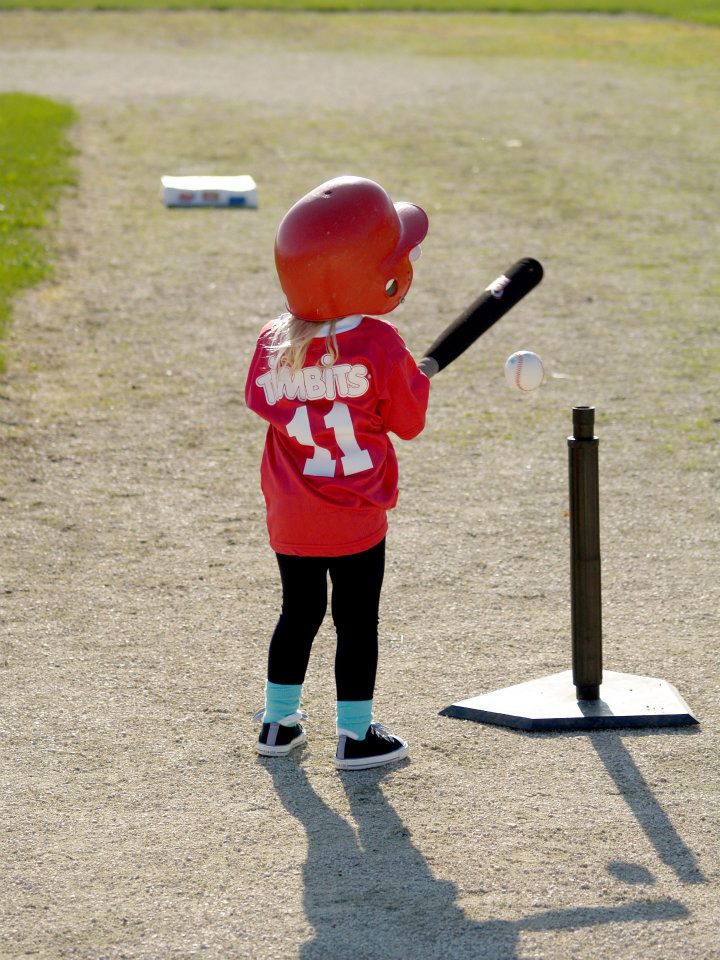
How to handle a t-ball job.

Let's outline a typical recreational league numbering job. First there are many teams. Often, 10 or more. Then each team has about 15 players per team. Usually it is a 1-color number on a colored 50/50 tee. Black is the most popular because of pricing. This gives a print change every 15 shirts, or a shirt color change every team.

There are a couple of ways to handle this order that are profitable. You can either sort the laundry into stacks of numbers or stacks of teams. I prefer teams because I only want to sort 1 time. If you own a numbering system, that is the way to go. If not, then sort by number.

When you are putting the image on the garment, you should screen print. This is, after all, a for-profit venture you are running. Charity is nice. Especially when there are children involved. But this is not the time to donate. Therefore, turn off the heat transfer machine and the cutter and walk away from the transfers. Cost on that is about $1 per number. Did I mention the desire for profit?

If you have a numbering system, use it. If not, burn your 15 screens and get over it. These screens cost $.060 each to image and the print is $.06 per impression of ink. The labor is the same whether you transfer or print. Total cost per imprint is $.010. That's right, 10 cents. This is where the money is made.

If you can sort the laundry 1 time, screen print directly on the garment and ask for payment on delivery, then you are making a profit. That is the reason we do this, right?

For more information on athletic numbering systems please check out our site. www.brownmfg.net.