Showing posts with label anaconda. Show all posts

Monday, December 11, 2017

2017. A year of innovation.


What an amazing whirlwind of a year.  New technology and innovation moved Brown and BrownDigital into new segments of the garment decorating industry.  This addition brings new energy and enthusiasm to existing projects as well.

So what's new?

That's a big question.  Around our facility it feels like everything is new.  New curing systems, new printing technology and completely new product lines.  

Expanded Anaconda™

The Anaconda system is a flat heater that combines with a roller in an automatic printer to flatten fibers into ink to create a smoother print surface and, hence, brighter prints.  Originally, this was developed to use a 23" x 31" M3 roller frame support platform to fit into an standard automatic textile printer, like our ElectraPrint Stealth.  The excitement for the Anaconda has grown and we expanded the possible press sizes for it.  Now it can be mounted on a 21" x 24" MZX roller frame support which allows it to fit into smaller automatic presses like our ElectraPrint Junior.

The creativity of our customers as to how this product can benefit production is exciting.  We see the Anaconda applied to prints on polyester with dye migration issues, on water base or discharge inks to activate the cure and smooth out the print and on fibrous shirts for a crisper finished print.  The options are exciting.

Synergy™ pretreat system

BrownDigital moved deeper into the world of direct to garment printing.  The Synergy pretreat module system is a high production pretreated that ties directly into the FireFly™.  This unit offers more features and sprays pretreat more evenly and at higher speeds than competitive machines.  The exciting connection to the Brother GTX line of printers allows for pod style production growth with minimal labor costs.  Check out our recent blog about these pod systems.

This system also puts more information in front of the garment loader.  There is always a concern that what is pretreated is not the correct garment for the required order.  The projection system that is included with the Synergy displays an image of the shirt required and the image that is to be printed.  This gives confirmation to the operator that the are loading the correct product.  Features like this make this the leader in pretreat technology.

Linx™ Control System Integration
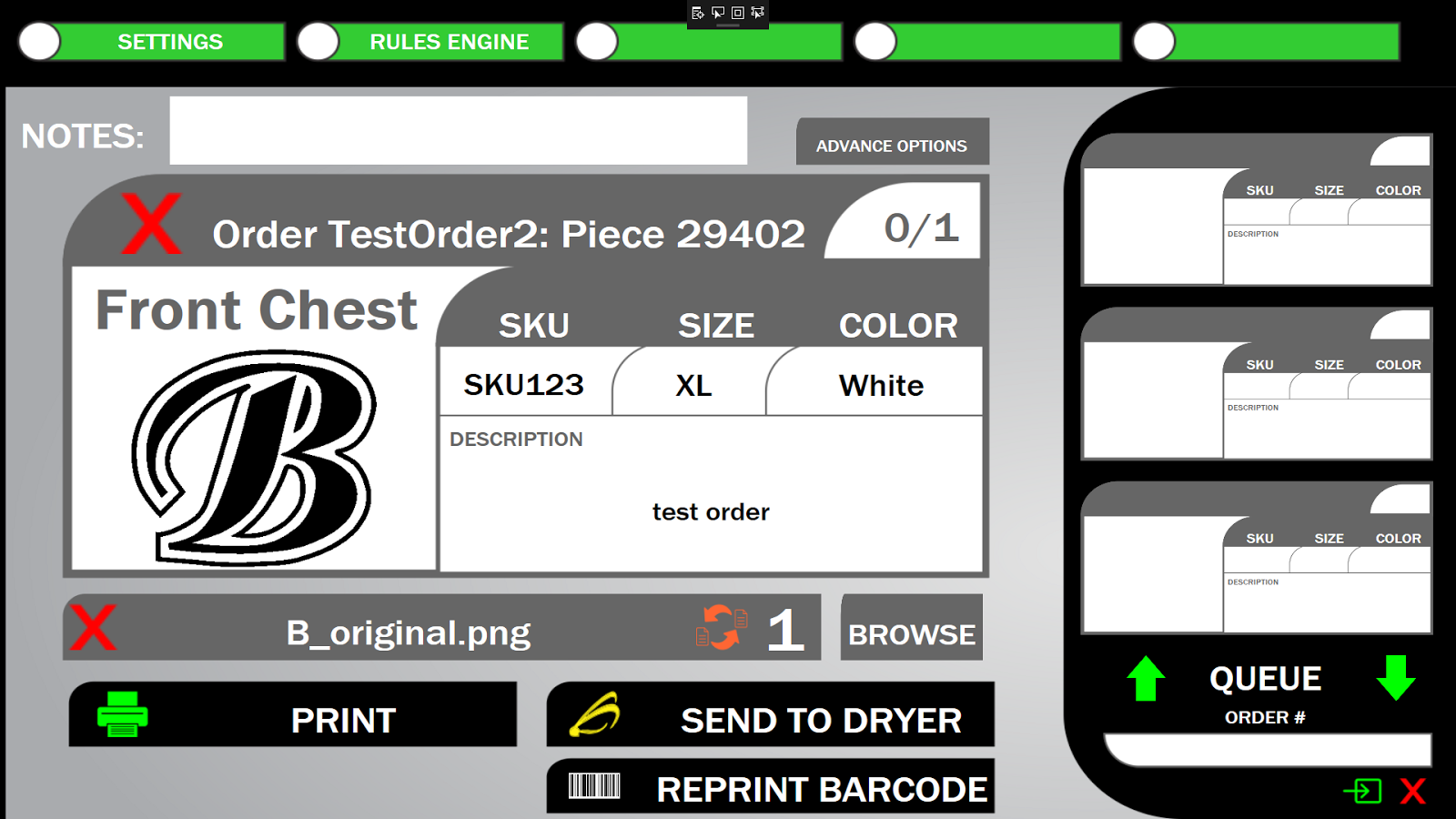
What is Control System Integration?  It is complete production software that ties your orders to your pretreat, digital printer and shipping software.  A barcode control system allows for inventory control and complete tracking of goods within your production facility and into shipping.  This product has quietly expanded and is running in facilities throughout the US.  BrownDigital views this as an essential component to online sales and digital printing.  This is a lead off for 2018 and it is an exciting direction for our corporate growth.

Brown Mfg and BrownDigital are looking forward to 2018.  The expansion of market areas from our existing product line and the development of new items is exciting.  Keep watching this blog for updates.  


Thursday, March 30, 2017

Anaconda flash cure features


The Anaconda is the latest option for the ElectraPrint automatic t-shirt printer.  This system uses heat and a roller to flatten the fibers of a garment into the base ink layer.  The effect is sharper prints that pop off a shirt and feel softer and smoother.


Simple in design.

Using the structure of a Stretch Devices M3 roller frame, the Anaconda utilizes teflon sheeting as the base support that is in contact with the garment.  A flat, flexible heater is placed in the squeegee side of the teflon.  A digit temperature control with a thermocouple will keep the heater within 7° of the set temperature.  A silicone pad is placed on top of the heater for friction protection.  A roller is used in the squeegee system to press the heat onto the shirt.  Typically used in conjunction with a standard QuartzAir flash, this process offers startling results with quick speed.

Not just for Brown presses.

Because the frame structure is a standard 23" x 31" M3 roller frame, the Anaconda can be used with any automatic press.  Roller systems are available for all press types.  

Reasonable cost and simple install.

The Anaconda is no more expensive than our QuartzAir flash systems and they require only 120V, 17A of power, installation is quick and simple.  These are a great addition to any shop.  

For additional information call us today.  616-249-0200


Thursday, September 22, 2016

Flash cure options. Which is right for your production?

A must-have

One essential machine for any textile printing production line is a flash or spot cure unit.  These machines are essentially heaters on a stand that gel under layers of ink so that additional layers can be printed on top.  This process is necessary for white inks to pop and specialty inks to shine.  However, the technology, sizing, features and price tag can vary from unit to unit.  So which one is best for your production?

Cal-rod or Firebrick style

These are the type of unit that the majority of print shops own and use every day.  They have a stable heat source that stays hot continually and is durable and reliable.  The temperature is typically controlled by adjusting the distance from the garment and the length of time heat is applied to the print.  

One factor in the intensity of the heat is the size of the heat area in relation to the power supplied.  Many community print shops like machines that only require 120V power.  So, to provide the best unit at that power level we designed the FF-1616.  This unit has a heating area of 16" x 16".  Some of our competitors offer a similar unit with a heat area of 18" x 18".  The 120V power distribution through a larger space can cause a cooler overall surface area.  

For 208V-240V power supply, the heating area can get larger.  The Brown FF-2020 is a 20" x 20" heating area.  Again, there are some that are 24" x 24" but the heat intensity may reduce with that large of a surface area.

This style flash units often have limited controls and features.  Since these heaters are not quick to respond but hold heat well, simple temperature controls are best suited.  The Brown FastFlash comes equipped with rheostat style controls and also wheels for easy relocation on the production floor.

There are some units are available with motorized heads that will rotate the heater on and off the platen for a set amount of time.  This reduces the possibility of garment or platen scorch and offers a more consistent gel of ink.

The biggest feature of this style flash unit is the price.  Because of the heater style and limited controls, these units are the most inexpensive type.  They ship UPS or FedX because they are light weight and they last for years.  

Quartz style flash units

Originally designed to mount on automatic t-shirt printers, these are rapidly becoming the standard for both manual and automatic production lines.  They are instant on/off and are quickly react for temperature adjustment.  They are very hot but, since they are quartz bulbs, they are not as reliable as the cal-rod style.  

These type units will typically come with temperature controls.  The type of controls affects the final cost of the unit.  They also will vary with the number of bulbs and how tightly they are mounted.  The more bulbs in a smaller space the hotter the unit.  But also, the more bulbs, the higher the power requirements.

Distance from the garment is still a factor.  The heaters are very intense and the heat distribution uses reflectors and the distance to the garment will balance the intensity.

The QuartzAir Flash from Brown balances the heat requirements with reasonable power supply needs.  They can be connected with an ElectraPrint machine or as a stand alone unit for any manual printer.  The units equipped to print on manual machines come with a timer that is activated by a foot switch or a laser sensor.  

The price tag is the final issue.  These units start 3x than the price of a cal-rod style.  However, they are hotter, faster and give a more reliable result.  This is a worthwhile investment when printing higher volume or temperature sensitive garments.  

Anaconda™.  Wait!  What's that?

With the advent of direct to garment printing, the look of the finished garment has changed.  Also, digital print heads are now incorporated into automatic textile screen printers.  This has changed the base requirements for a flash unit.  

The Anaconda is a flat heater encased in teflon that a roller presses onto a print.  The goal is to fold the fibers into the base coat and gel the ink.  This process is done manually on DTG machines and it creates a cleaner finished print.  Now that look and process is demanded on automatic presses.  The Anaconda will mount onto any manufacturer's press and a roller is substituted for the squeegee.  The shirt is flashed and pressed for the next layer of ink.
These units are highly controlled, offer quick reaction to temperature regulation and give the crisp print desired in the latest fashion market.  What is amazing is the price.  These units are similarly prices as the QuartzAir units.  

So what is right for your shop?

That is the real question.  The factors of production speed needs, power availability, finished look requirements and bottom line budget are what drives this decision.  For today, we still see most community printers with cal-rod flashes being the mainstay of the production floor.  The quartz style rule the automatics today and are edging in on the manuals but the Anaconda flash has an interesting future.

If you are not sure and want a bit of personal guidance, give us a call.  616-249-0200