Showing posts with label color matching. Show all posts

Wednesday, March 1, 2023

Brown is our name, but we are open to other options

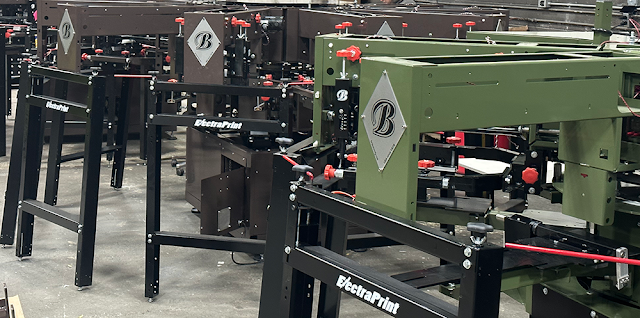
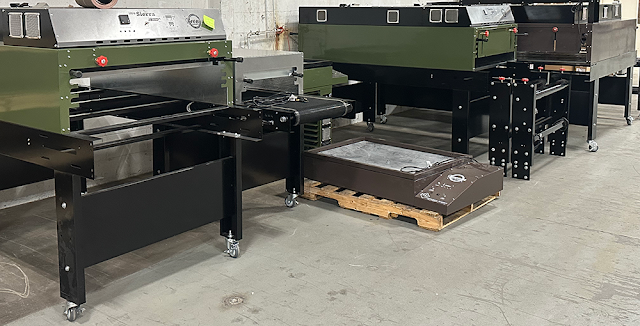
 An army of machinery. And some are painted Military Green.


We have done some fun custom colors in the past.  Bright pink, red, purple and blue have all popped into our assembly line as customer request.  This is our first military green.  


The whole shop for this customer will be color themed.  

If this is a feature that interests you, please contact us for information on how we can custom paint your machinery to make your production part of your showroom experience.


Monday, November 5, 2018

Our industry is unique, and challenging

I met a friend for cocktails this weekend and we discussed our careers and the industries that we are in.  This person had a recent job change and was describing the differences in the two markets.  While chatting, the question came up, "Why is printing on a t-shirt so hard?"  It occurred to me then that what we do is truly unique.  In most industries the production variables are limited and consistent.  The "how to" is measured and analyzed with tolerances defined and universal industry standards measured.  Well, anyone who has printed garments knows that most of this does not apply to us.

Sure we have defined cure temperatures for ink.  Sure we have PMS color matching.  And, of course, we have production rate requirements.  But even all of this is loosely followed.  Ink cure temperatures rates vary by brand and type.  PMS colors are borrowed from other print industries and are loosely applied to color cards from ink companies, though many shops do have custom ink mixing in house.   As for production rates, we are all trying to produce a profit.  And that need drives everything.

So my companion currently sells high end cars and used to sell real estate.  Market and economy fluctuations are what drives these industries.  In the metal fabrication business, metal is systematically measured and variables in quality are based on the human factor.  The inkjet, laser and DTG printers that surround my desk are all assembly line production items as is the laptop I am writing with.  So I explained all of the options within production and sales of printed garments and I mystified myself with questions of how we do it all.

Let's go over the list.

  • Every garment type is different:
    • color
    • fabric
    • weight
    • pile
    • construction
  • Every individual garment may be different:
    • size
  • Every ink type has a different cure temperature and that is influenced by:
    • thickness of the ink film
    • thickness of the garment
    • number of layers of ink film
    • time in the chamber
    • temperature of the chamber
    • air flow of the heat chamber
  • Each artwork file has it's own printing parameters
    • size
    • number of colors
    • type of separation
    • what color it is to print onto
  • Type of printing influences or is influenced by all of the above
    • Manual screen
    • Automatic screen
    • DTG
    • Sublimation
  • DTG variables include
    • pretreat type
    • pretreat density
    • pretreat cure
I have only scratched the surface of what can happen in a day.  So what do you do?

You can go old school.  And it works.  

Log books, spread sheets, paper pick tickets with instructions, even sharpie marker notes on the machinery can help limit issues.  As an example, a pick ticket should include order information, cure settings, pretreat requirement, ink colors and color order.  This is a solid system that works most of the time and is historically reliable.  

Now let's move that to today's technology.  


Digital resources make it possible to put every piece of information in one storage location and link all that together by all the variables.  This can all be put on a mobile device at each production unit that can reference the information by scanning a barcode.  This technology is used in most production industries today and, because of all of our variables, should have been in garment decorating years ago.


A previous blog was written on our Linx software.  This system manages the information on all of the variable that are listed above.  Once information about a type of garment are input into the data base then that information is linked to any order that needs that garment.  It stores artwork files and connects them to orders.  It controls curing and pretreat parameters in the Synergy and FireFly.  It can track orders through production and connect them to ShipStation.  This tool helps to contain the chaos that is elemental to garment decoration.

So, though the cocktail and conversation was a wonderful way to catch up, my companion decided that what I do is crazy talk and selling Porsche and Bentley are a better fit.


Tuesday, April 11, 2017

Master Printer series: Greenery is important

From our Master Printer


As our Master Printer visits customers to install new machines and to help improve the production at our existing customer's locations, he notices things that may help all who are interested in keeping up with the best production techniques and the latest technology.  This is the latest in the series of observations.

Spring is a time of upkeep

Spring is here and we've set our clocks accordingly and replaced the batteries in our smoke alarms..  If you have read previous spring cleaning posts, you have already done the suggested maintenance for all of your equipment.  If you are interested in a technician doing some maintenance on your machinery, just give us a call or send us an email.

However, there is another level of spring upkeep, Pantone® books.  Pantone is a universal way of conveying color to different vendors across a vast array of products.  These colors are referenced in all manner of marketing and printing and Pantone is a color palette in artwork applications.  Just for fun, the Pantone color of the year for 2017 is Greenery, number 15-0343 and hex code is 88B04B.  If you aren't familiar with what these numbers reference, you might check out our latest e-blast because it is the background color.

So how does any of this apply to a textile printer?

Most community based customers have an image in their head or a previous print job in their hand that they are trying to match.  Do NOT let them use a Pantone book to match these colors.  This is where your handy color book from the ink supplier is best applied.  These are standard colors that will suit most situations and will make your life easier.  Keep one of these handy for all your sales conversations.  Typically, these are actual prints of standard colors that are glued into place.  They will give the best representation for the customer.  And for your own production simplicity, try to lead a customer to the colors you already own and stock 2 reds, 2 blues and 2 yellows. This reduces your inventory costs and future headaches on repeat orders.

The best representation is a key word here.  Computer monitors are not all the same.  What appears scarlet red on your screen will appear differently when you send a PDF mock up for your customer to approve.  Also, the output device that you print from will give different results than one at the customer shop and will be different than the final print.  This is where the true color card is important.  

If a customer refers to a Pantone color and has had other items printed with that color, then it is advised to use exactly that color.  This is where your own book comes in handy.  These books fade with time so a new one should be ordered every few years.  Also, these colors are shown in matte, coated, and uncoated.  This refers to the offset printing process.  However, most textile printers refer to the coated color to match due to the final finish of textile inks.  Be specific when with your customer because the uncoated colors are darker with less "pop" than the coated.

The formula guide for the color is printed on the book.  Those rations will give you great results if you have the mixing colors in house.  If you need small quantities, your local supplier can mix the color for you.  If you have customers who refer to custom colors often, then a mixing system in-house would be a good investment.

Why would I want to mix my own colors?

In addition to customers who refer to Pantone colors there are other reasons to mix color in-house.

ShortStop Athletic Numbering System
We are sure that you have already run into the problem that your little league heat seal numbers do not match the direct print ink that you are printing for the logo.
On a sales note, that is one reason that Brown sells athletic numbering systems.  But, moving along.
How do you fix this in your current shop?  Many customers will custom mix these colors and keep them separate from the stock colors.  Use your Pantone book to match to the vinyl and mix your direct color based on that formula.  Again, we would really suggest direct printing the numbers as well, but you might still have to match to individual player names.

How does this pay out?

Pantone books have a bit of a sticker shock until you realize how often they are used.  Also, color mixing seems daunting until you have done it a few times.  However, quality prints, done quickly for happy customers make for profitable businesses.